10 Best Gps Chartplotters 2026 in the United States
Related Products
Up to 24% off

Our technology thoroughly searches through the online shopping world, reviewing hundreds of sites. We then process and analyze this information, updating in real-time to bring you the latest top-rated products. This way, you always get the best and most current options available.

Our Top Picks
Winner
Garmin ECHOMAP UHD2 94sv with GT56 Transducer, 9" Touchscreen Chartplotter, Garmin Navionics+ U.S. Coastal
Most important from
78 reviews
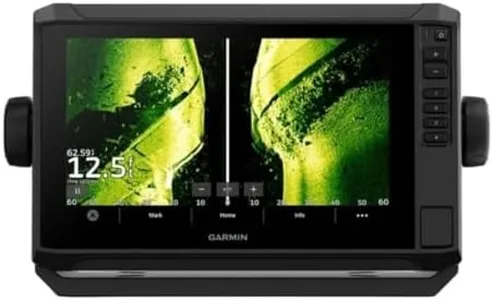
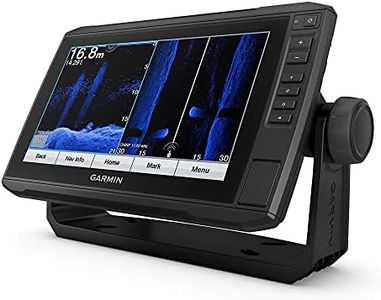
The Garmin ECHOMAP UHD2 94sv is an impressive chartplotter designed for boaters and anglers looking for reliability and advanced features. With its 9-inch touchscreen display, users can expect easy navigation with bright, clear visuals that remain readable even in sunlight. The included GT56-TM transducer provides traditional sonar along with ClearVü and SideVü scanning, ensuring detailed underwater views, which can greatly enhance fishing efficiency. Plus, the built-in Garmin Navionics+ charts cover U.S. coastal areas, offering comprehensive navigation options right out of the box.
One of the standout features is the built-in Wi-Fi connectivity, which allows users to wirelessly share data with another compatible ECHOMAP UHD2, making it easy to coordinate between multiple devices. This chartplotter also connects to the Garmin Force trolling motor, enabling users to create routes and control motor functions directly from the chartplotter interface.
There are a few considerations to keep in mind. While the touchscreen is responsive and user-friendly, some users might prefer physical buttons, especially in rough waters or when wearing gloves. The resolution at 1024 x 600 is decent, but some competitors offer higher resolutions, which could provide even sharper images. Additionally, while it’s a versatile device, users entirely new to chartplotters may find the initial setup slightly complex, though the included documentation helps ease that process.
Most important from
78 reviews
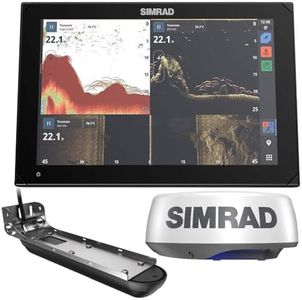
Simrad GO9 XSE Chartplotter and Fishfinder with HALO20 Radar, 83/200 Transom Mount Transducer and C-MAP Discover Charts, 9 Inch Screen, Black, 000-16294-001
Most important from
14 reviews
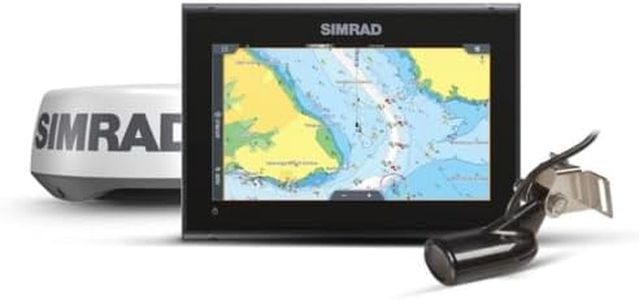
The Simrad GO9 XSE is a solid choice for boaters who want a combination of GPS navigation, sonar fishfinding, and radar all in one 9-inch device. It has a bright, full HD touchscreen (1920 x 1080 resolution), making maps and sonar images clear and easy to read even in bright daylight. The preloaded C-MAP Discover charts cover wide areas in the US and Canada with detailed depth shading, tides, and currents, which helps with safe and informed navigation. The built-in GPS receiver supports accurate positioning, which is essential for both navigation and fishing. One standout feature is the included HALO20 solid-state radar, which improves safety by spotting other boats and obstacles in all weather conditions.
The device offers multiple ways to connect, including Wi-Fi, Bluetooth, and Ethernet, letting you pair it with smartphones or other onboard systems easily. Control is through a smooth capacitive touchscreen, which most users find intuitive compared to button controls. On the downside, while the 9-inch screen is a good size for many boats, those who want a larger display might find it limiting. Also, some users might need time to get used to the Android-based interface if they are unfamiliar with it. The device doesn’t include batteries, so it needs to be wired to your boat’s power.
This chartplotter is well-suited for sportboats, center consoles, and coastal cruisers, especially anglers who benefit from integrated sonar and radar. Although it requires a notable investment, the device offers many features that enhance the navigation and fishing experience.
Most important from
14 reviews
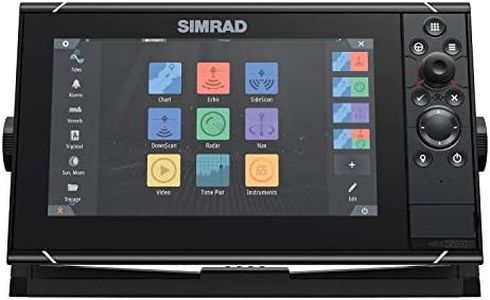
Simrad NSS16 Evo3S - 16-inch Multifunction Fish Finder Chartplotter with Preloaded C-MAP US Enhanced Charts
Most important from
35 reviews
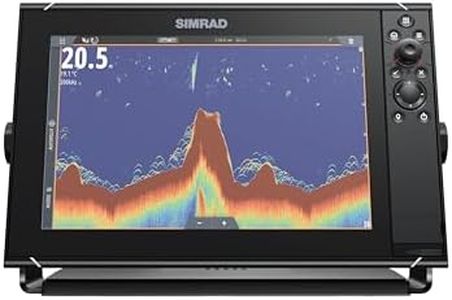
The Simrad NSS16 Evo3S is a solid choice for boaters looking for a high-performance 16-inch GPS chartplotter. Its large, full HD LCD screen provides clear visuals that make navigation and fish finding easier, especially with smooth, fast response thanks to a powerful iMX 8 processor. Preloaded with detailed C-MAP US Enhanced charts, it covers both inland and coastal waters, making it useful for a wide range of boating adventures. The built-in GPS receiver ensures reliable navigation without needing extra equipment.
It offers versatile control options by combining a responsive all-weather touchscreen with a traditional keypad and rotary dial, so you can choose what works best in different conditions. Connectivity is strong, allowing you to integrate with sonar, radar, engine data, and onboard audio, giving a full picture of your vessel’s status. This makes it well suited not just for navigation but also for serious fishing and vessel management.
At 15 pounds and with dashboard mounting, it’s a bit bulky compared to smaller models, which might be a consideration for smaller boats. Although it’s priced at a premium, the built-in features and reliable performance justify it for enthusiasts or professionals needing advanced fish finding and navigation features. For those seeking a versatile, large-screen chartplotter that combines modern touchscreen ease with physical controls and comprehensive system integration, the Simrad NSS16 Evo3S is a strong contender.