We Use CookiesWe use cookies to enhance the security, performance, functionality and for analytical and promotional activities. By continuing to browse this site you are agreeing to our privacy policy

10 Best Dslr Cameras 2026 in the United States
How do we rank products for you?

Our technology thoroughly searches through the online shopping world, reviewing hundreds of sites. We then process and analyze this information, updating in real-time to bring you the latest top-rated products. This way, you always get the best and most current options available.

headphones-stars

Our Top Picks

#1

Winner

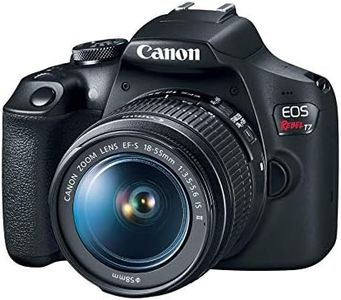
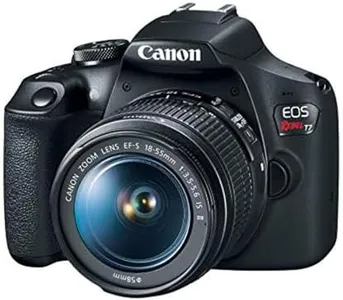
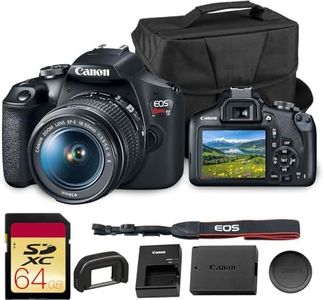
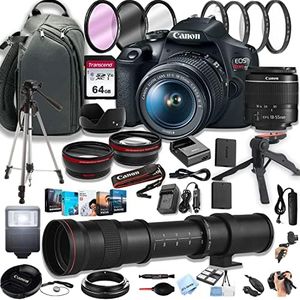
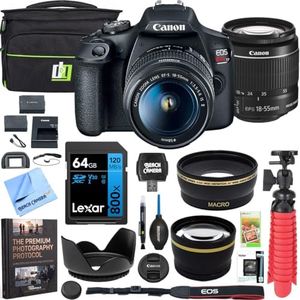
Canon EOS Rebel T7 DSLR Camera with 18-55mm Lens | Built-in Wi-Fi | 24.1 MP CMOS Sensor | DIGIC 4+ Image Processor and Full HD Videos

Rating
10.0
Chosen by1,151
Build Quality and Ergonomics
Lens Compatibility

Most important from
8425 reviews

Build Quality and Ergonomics
It is not too delicate; I dropped it and it survived after repair.
Lens Compatibility
Love the quality, image clarity and flexibility to get all kinds of lenses and accessories.

The Canon EOS Rebel T7 is a solid entry-level DSLR camera that caters well to beginner photographers and those looking to step up from smartphone photography. With its 24.1 Megapixel APS-C CMOS sensor, it captures sharp images with decent detail, making it suitable for everything from casual family photos to beginner landscape shots. The ISO range of 100-6400 (expandable to 12800) allows for versatility in various lighting conditions, although performance at higher ISO settings might introduce some noise.

One of the standout features of the T7 is its built-in Wi-Fi and NFC capabilities, which make sharing photos easy and convenient. The camera's 9-point autofocus system is straightforward, enabling users to focus on subjects effectively, though professional photographers may find it a bit limiting compared to models with more advanced autofocus systems.

The optical viewfinder provides about 95% coverage, which is standard for cameras in this class, but it may present some challenges in precise framing. The camera supports Full HD video, which is great for casual video recording, but it does lack 4K capability, which might be a drawback for those wanting to create high-resolution video content. In terms of build quality, the T7 feels sturdy, yet it remains lightweight and easy to handle, making it a good choice for extended shooting sessions. Lens compatibility is also a strength, as it accepts a wide variety of Canon EF lenses, offering flexibility for future upgrades.

Rating
10.0
Chosen by1,151
Build Quality and Ergonomics
Lens Compatibility

Most important from
8425 reviews

Build Quality and Ergonomics
It is not too delicate; I dropped it and it survived after repair.
Lens Compatibility
Love the quality, image clarity and flexibility to get all kinds of lenses and accessories.
#2

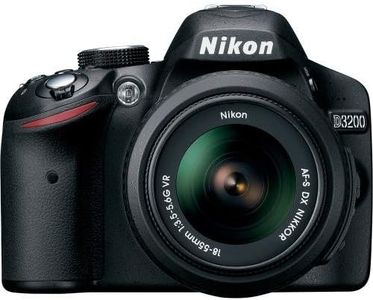
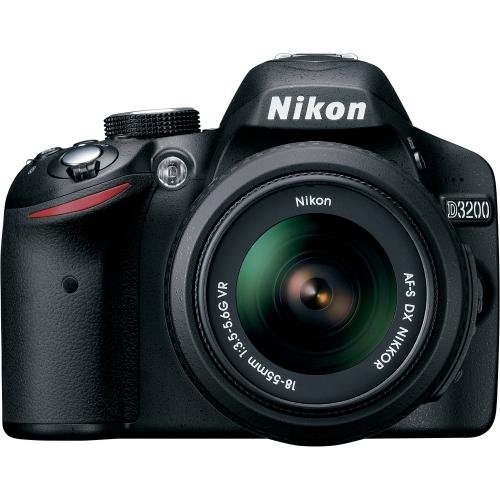
Nikon D3200 24.2 MP CMOS Digital SLR Camera with 18-55mm and 55-200mm VR DX Zoom Lenses Bundle

Rating
8.8
Megapixels
Build Quality and Ergonomics
Lens Compatibility

Most important from
126 reviews

Megapixels
The Nikon D3200 delivers impressive image quality with its 24.2-megapixel sensor, producing clear, crisp photos even in action shots without blur.
Build Quality and Ergonomics
Its lightweight design and comfortable grip make it easy to carry around, enhancing the overall shooting experience.
Lens Compatibility
The included 18-55mm lens is versatile and capable of capturing great all-around pictures, while the compatibility with a wide range of Nikon F-mount lenses offers room to expand creatively.

The Nikon D3200 is a solid entry-level DSLR that suits beginners and casual photographers looking to get serious about photography. Its 24.2-megapixel CMOS sensor delivers good image quality with plenty of detail, making it great for printing photos or cropping without losing sharpness. The ISO range of 100 to 6400 (expandable to 12,800) allows for decent performance in various lighting conditions, though it may start to show noise in very low light. The autofocus system includes 11 points with 3D tracking, which is helpful for keeping moving subjects in focus, but it’s not as advanced as more expensive models. Shooting at 4 frames per second is sufficient for capturing some action shots but may not meet the needs of fast-paced sports photography. Video capabilities are basic but functional for casual HD recording.

Build quality and ergonomics are comfortable for beginners, with a lightweight design that makes it easy to carry around. The included 18-55mm and 55-200mm VR lenses offer versatile zoom ranges for everyday shooting, from wide-angle to telephoto, and feature vibration reduction to help steady shots. The camera uses Nikon F-mount lenses, providing access to a wide variety of additional lenses as you grow your skills.

Though it is not the most advanced DSLR on the market, the Nikon D3200 provides a strong combination of image quality, ease of use, and value. This makes it a good pick for those new to DSLRs or hobby photographers who want a reliable camera without a steep learning curve.

Rating
8.8
Megapixels
Build Quality and Ergonomics
Lens Compatibility

Most important from
126 reviews

Megapixels
The Nikon D3200 delivers impressive image quality with its 24.2-megapixel sensor, producing clear, crisp photos even in action shots without blur.
Build Quality and Ergonomics
Its lightweight design and comfortable grip make it easy to carry around, enhancing the overall shooting experience.
Lens Compatibility
The included 18-55mm lens is versatile and capable of capturing great all-around pictures, while the compatibility with a wide range of Nikon F-mount lenses offers room to expand creatively.
#3

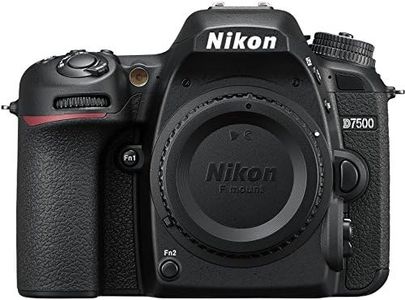
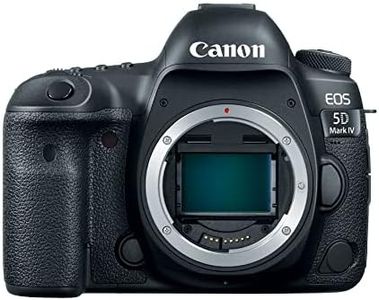
Canon EOS 5D Mark IV Digital SLR Camera (Body Only), Full-Frame DSLR Camera, 30.4 Megapixel CMOS Sensor, 4K Video, Content Creator Camera, EF Mount, Black

Rating
8.8
Megapixels
Autofocus System
Frame Rate

Most important from
855 reviews

Megapixels
The new 30MP sensor delivers an impressive dynamic range, making it a significant upgrade for low-light photography.
Autofocus System
The Canon EOS 5D Mark IV feels familiar yet improved for those upgrading from the Mark III, particularly with its brighter viewfinder and faster autofocus.
Frame Rate
The burst rate has improved, ensuring you won't miss the perfect shot, especially with a good CF card.
Build Quality and Ergonomics
Despite its bulkier build, the robust construction and professional-level quality make it a joy to work with.

The Canon EOS 5D Mark IV is a full-frame DSLR that stands out for its impressive 30.4-megapixel sensor, delivering sharp images even in low-light conditions thanks to its ISO range of 100-32,000, which can be expanded to 50-102,400. This camera is particularly appealing for content creators and serious photographers who value video capabilities, as it can shoot 4K video at 30 or 24 frames per second and offers various other video resolutions and frame rates. Its fast DIGIC 6+ image processor enhances performance, allowing up to 7 frames per second continuous shooting, ideal for capturing action shots.

One of the notable strengths is its advanced autofocus system, featuring 61 autofocus points with Dual Pixel CMOS AF, which allows for smooth focus transitions in both video and still photography. The camera also includes a touch-sensitive LCD screen, facilitating easier navigation and focus selection.

There are some drawbacks to consider. While it’s built to last, the camera body is relatively heavier compared to some other models, which might be a concern for those looking for portability. Additionally, the absence of in-body image stabilization could limit handheld shooting options, especially under challenging conditions. This camera is designed for more serious photography and videography, which might come with a steeper learning curve for beginners. The camera's lens compatibility with the Canon EF and EF-S series opens a wide range of shooting possibilities, making it a versatile choice for various photography styles. With its robust feature set and excellent image quality, the Canon EOS 5D Mark IV is particularly well-suited for professional photographers and videographers looking to elevate their craft.

Rating
8.8
Megapixels
Autofocus System
Frame Rate

Most important from
855 reviews

Megapixels
The new 30MP sensor delivers an impressive dynamic range, making it a significant upgrade for low-light photography.
Autofocus System
The Canon EOS 5D Mark IV feels familiar yet improved for those upgrading from the Mark III, particularly with its brighter viewfinder and faster autofocus.
Frame Rate
The burst rate has improved, ensuring you won't miss the perfect shot, especially with a good CF card.
Build Quality and Ergonomics
Despite its bulkier build, the robust construction and professional-level quality make it a joy to work with.

Buying Guide for the Best Dslr Cameras

Choosing the right DSLR camera can be a daunting task, but with a little guidance, you can find the perfect fit for your needs. The key is to understand the various specifications and how they align with your photography goals. Whether you're a beginner looking to explore photography or a professional seeking advanced features, knowing what to look for will help you make an informed decision.
Sensor SizeThe sensor size in a DSLR camera determines the quality of the images it can produce. Larger sensors, such as full-frame sensors, capture more light and detail, resulting in higher image quality, especially in low-light conditions. APS-C sensors are smaller but still offer excellent quality and are more affordable. If you're a professional or serious enthusiast, a full-frame sensor might be the best choice. For beginners or hobbyists, an APS-C sensor can provide a good balance of quality and cost.
MegapixelsMegapixels refer to the resolution of the camera's sensor, indicating how many millions of pixels the camera can capture. Higher megapixels mean more detail in your photos, which is important for large prints or cropping images. However, more megapixels also mean larger file sizes. For most users, a camera with 16-24 megapixels is sufficient. If you need extremely high detail for professional work, you might consider a camera with 30+ megapixels.
ISO RangeISO range measures the camera's sensitivity to light. A wider ISO range allows you to shoot in various lighting conditions, from bright sunlight to low-light environments. Higher ISO settings can introduce noise (graininess) into your photos, so it's important to find a camera that performs well at higher ISOs. For general use, an ISO range of 100-6400 is usually adequate. If you often shoot in low light, look for a camera with an extended ISO range, such as 100-25600 or higher.
Autofocus SystemThe autofocus system determines how quickly and accurately the camera can focus on a subject. More autofocus points and advanced tracking features can help capture sharp images, especially in fast-moving situations like sports or wildlife photography. For casual photography, a basic autofocus system with fewer points may suffice. If you need to capture fast action or shoot in challenging conditions, look for a camera with a sophisticated autofocus system and numerous focus points.
Frame RateFrame rate, measured in frames per second (fps), indicates how many images the camera can capture in a second. A higher frame rate is beneficial for action photography, allowing you to capture multiple shots in quick succession. For general photography, a frame rate of 3-5 fps is usually enough. If you plan to shoot sports, wildlife, or other fast-paced activities, consider a camera with a higher frame rate, such as 8-10 fps or more.
Video CapabilitiesMany DSLR cameras offer video recording capabilities, which can be important if you plan to shoot videos in addition to still photos. Look for features like resolution (Full HD or 4K), frame rates, and additional video-specific features like microphone inputs and autofocus during video recording. If video is a significant part of your work, prioritize these features. For occasional video use, basic video capabilities in a DSLR should be sufficient.
Build Quality and ErgonomicsThe build quality and ergonomics of a DSLR camera affect how comfortable it is to use and how well it can withstand different shooting conditions. Cameras with weather-sealed bodies are more durable and can handle harsh environments. Ergonomics, such as the grip and button layout, are also important for ease of use. If you plan to shoot in challenging conditions or for extended periods, prioritize a camera with robust build quality and comfortable ergonomics. For casual use, a lighter and simpler design may be more convenient.
Lens CompatibilityDSLR cameras use interchangeable lenses, so it's important to consider the range and quality of lenses available for the camera system you choose. Different brands offer various lens options, from wide-angle to telephoto, and specialized lenses like macro or portrait lenses. Think about the types of photography you want to pursue and ensure the camera system has the lenses to support your needs. For versatility, choose a system with a wide range of high-quality lenses.

FAQ