10 Best Cycling Gps Units 2026 in the United States

Related Products
Up to 20% off
Recommended lists


Our technology thoroughly searches through the online shopping world, reviewing hundreds of sites. We then process and analyze this information, updating in real-time to bring you the latest top-rated products. This way, you always get the best and most current options available.

Our Top Picks
Winner
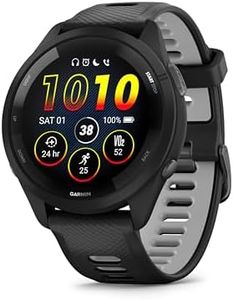
Garmin Forerunner 265 Running Smartwatch, Colorful AMOLED Display, Training Metrics and Recovery Insights, Black and Powder Gray
The Garmin Forerunner 265 is a versatile GPS smartwatch that suits cyclists looking for a compact device with advanced features. Its 1.3-inch AMOLED display is bright and clear, making it easy to read maps and stats even in daylight. The touchscreen combined with physical buttons offers flexible control, which helps when you need to operate it while riding. Battery life is impressive—up to 13 days in regular mode and about 20 hours with GPS active, enough for long rides without constant recharging. Thanks to multi-band GPS and SatIQ technology, location tracking is accurate even in tricky environments like dense urban areas or forests.
Mapping and navigation are well supported through the Garmin Connect app, and the watch offers real-time race and training insights, which can help cyclists plan workouts and monitor recovery effectively. It tracks a wide range of data such as heart rate, training load, and sleep quality, providing useful feedback on your readiness and effort. Connectivity with both Android and iOS devices is smooth, allowing smart notifications and contactless payments, which adds convenience on the go.
Durability-wise, the watch is water-resistant up to 50 meters and rated IP68, so it can handle sweat, rain, and even swimming without worry. However, it’s not a dedicated cycling GPS device with bike-specific features like turn-by-turn cycling directions or power meter compatibility, which some serious cyclists might miss. The interface is user-friendly but may take a little time to explore all its advanced training metrics. The Forerunner 265 is a strong choice for cyclists who want a reliable, stylish smartwatch with excellent GPS accuracy, long battery life, and comprehensive fitness tracking. It suits those who also enjoy running or swimming and appreciate detailed training insights. If you need a specialized cycling computer with deep bike-specific features, however, looking at dedicated cycling GPS units might be more suitable.
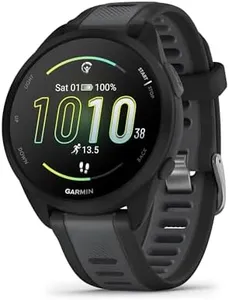
Garmin Forerunner 165, Running Smartwatch, Colorful AMOLED Display, Training Metrics and Recovery Insights, Black
The Garmin Forerunner 165 is primarily designed as a running smartwatch but also supports cycling and many other activities, offering a versatile experience for fitness enthusiasts. Its 1.2-inch AMOLED touchscreen delivers bright and clear visuals with a resolution of 324 x 394 pixels, making map details and stats easy to read even outdoors. The watch is lightweight and comfortable to wear, which is a plus during long rides. With up to 19 hours of battery life in GPS mode, it can handle most cycling sessions without needing a recharge, though very long rides or multi-day adventures may require backup power.
The built-in GPS supports multiple satellite systems (GPS, GLONASS, Galileo), which helps with accurate route tracking and navigation, essential for cyclists exploring new routes. However, it lacks detailed cycling-specific navigation features such as turn-by-turn cycling directions found on some dedicated bike GPS units. Connectivity via Bluetooth allows syncing with smartphones, smart notifications, and live tracking, which enhances safety and convenience on the road. The watch also tracks heart rate, calories, sleep, and recovery, providing useful insights for training balance and performance improvement.
Durability is good for everyday use; it’s water-resistant up to 50 meters (IPX7 standard), protecting against rain and sweat but it might not be ideal for more extreme weather or rugged off-road cycling. The user interface combines touchscreen and traditional buttons, making operation simple and intuitive, even while moving. One downside is the Forerunner 165 is limited in cycling-specific data analysis compared to some specialized cycling GPS devices that offer power meter integration and advanced cycling metrics. For those seeking a lightweight, stylish smartwatch that covers running and general fitness with solid GPS tracking and reasonable cycling support, the Forerunner 165 is a good choice. However, if your main focus is detailed cycling navigation and advanced bike-specific data, a dedicated cycling GPS might better suit your needs.
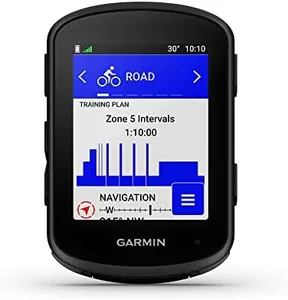
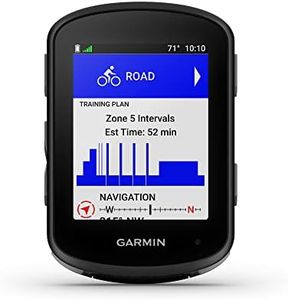
Garmin Edge 840, Compact GPS Cycling Computer with Touchscreen and Buttons, Targeted Adaptive Coaching, Advanced Navigation and More
Most important from
373 reviews
The Garmin Edge 840 is a solid choice for cyclists looking for a reliable GPS cycling computer. One of its standout features is its advanced mapping and navigation capabilities, bolstered by multi-band GNSS that ensures accurate positioning even in tough environments. This makes it a great option for those who love venturing off the beaten path or tackling challenging terrains. The touchscreen combined with button controls offers flexibility in user interaction, making it easy to navigate through various settings and features on the go.
Battery life is impressive, lasting up to 26 hours under demanding conditions and even extending to 32 hours in battery saver mode, ensuring that you won’t be cut short on long rides. The device also offers intelligent coaching features, adapting workouts based on your performance and recovery, which can be incredibly beneficial for those aiming to enhance their training.
The screen size of 2.6 inches may feel a bit small for some users, especially when trying to read detailed maps or data on the road. Moreover, it is compatible with various sensors for detailed data tracking, but users who do not own these accessories may miss out on some of the more advanced features like stamina insights and power guides. While it's designed to be durable and weather-resistant, cyclists should still be cautious in extremely harsh conditions. For casual riders or those new to cycling GPS units, the extensive features might seem overwhelming, but the user-friendly interface helps mitigate this. The Garmin Edge 840 offers great value for serious cyclists seeking comprehensive navigation and training assistance, though a slight learning curve may be needed for complete utilization.