We Use CookiesWe use cookies to enhance the security, performance, functionality and for analytical and promotional activities. By continuing to browse this site you are agreeing to our privacy policy

10 Best Condenser Microphones 2026 in the United States
How do we rank products for you?

Our technology thoroughly searches through the online shopping world, reviewing hundreds of sites. We then process and analyze this information, updating in real-time to bring you the latest top-rated products. This way, you always get the best and most current options available.

headphones-stars

Our Top Picks

#1

Winner

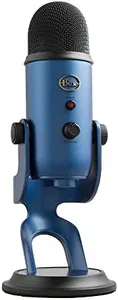
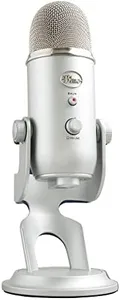
Logitech Creators Blue Yeti USB Microphone for Gaming, Streaming, Podcast, YouTube, Discord, PC, Studio Sound, Plug & Play-Blackout

Rating
10.0
Chosen by1,147
Frequency Response
Polar Pattern
Power Requirements

Most important from
56667 reviews

Frequency Response
The studio-quality sound captures voice perfectly with crisp, professional clarity and minimal background noise.
Polar Pattern
Switching between multiple polar patterns like cardioid and omnidirectional makes it incredibly versatile for calls, interviews, and group discussions.
Power Requirements
Its USB connectivity means no extra equipment or batteries are needed, making it highly convenient for content creators and professionals alike.

The Logitech Blue Yeti USB microphone is a versatile condenser mic that suits a wide range of uses like podcasting, streaming, music recording, and video calls. It offers a multipattern design, which means you can switch between different pickup modes (like cardioid, omnidirectional, and bidirectional), making it great for solo recording, interviews, or group settings. The frequency response covers the full human hearing range (20 Hz to 20 kHz), capturing clear and natural sound. It has a relatively low self-noise, so your recordings come through clean without much background hiss. The microphone handles loud sounds well, up to 120 dB, which is good for recording vocals or instruments without distortion.

It plugs in via USB, so it’s powered through your computer, making it easy to use without extra equipment or batteries. You get instant headphone monitoring with zero delay, helpful to hear exactly what you’re recording in real-time. Controls for volume, mute, gain, and pattern switching are built right on the mic, giving you hands-on control without needing extra software. It’s also portable with a foldable design and can be mounted on stands or shock mounts for flexibility.

While the Yeti is a solid all-around microphone, it is a bit bulky compared to some other condenser mics, and the USB connection limits use mostly to computers rather than professional audio gear. For content creators needing a reliable, easy-to-use mic with quality sound and versatile recording options, the Blue Yeti remains a popular and dependable choice.

Rating
10.0
Chosen by1,147
Frequency Response
Polar Pattern
Power Requirements

Most important from
56667 reviews

Frequency Response
The studio-quality sound captures voice perfectly with crisp, professional clarity and minimal background noise.
Polar Pattern
Switching between multiple polar patterns like cardioid and omnidirectional makes it incredibly versatile for calls, interviews, and group discussions.
Power Requirements
Its USB connectivity means no extra equipment or batteries are needed, making it highly convenient for content creators and professionals alike.
#2

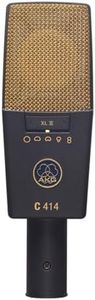
AKG Pro Audio C414 XLII Studio Grade Professional Large Diaphragm, Dual-Capsule, Vocal and Instrument Condenser Microphone with Rugged Aluminum Carrying Case. XLR Connector. Gray with Gold

Rating
8.8
Self-Noise
Max SPL (Sound Pressure Level)

Most important from
1329 reviews

Self-Noise
Exceptionally low self-noise allows for crystal-clear recordings, even of very quiet acoustic instruments and subtle sound effects.
Max SPL (Sound Pressure Level)
Handles both loud and soft sounds seamlessly without distortion or drastic volume changes, providing a balanced and reliable performance.

The AKG C414 XLII is a professional-grade large diaphragm condenser microphone designed for vocals and instruments, offering impressive versatility. It covers a wide frequency range of 20 Hz to 20 kHz, capturing clear and detailed sound across low to high tones. One of its standout features is the nine selectable polar patterns, including cardioid, figure eight, and omnidirectional, allowing you to tailor the mic’s pickup to different recording situations, whether you’re in a studio or doing live sound.

The sensitivity rating (23 mV/Pa) is strong, meaning it picks up even subtle nuances well, while the low self-noise level (6 dB-A) helps keep recordings clean and free of hiss. It can handle loud sound sources up to 158 dB SPL, so it works with everything from soft vocals to loud instruments without distortion. The mic’s solid aluminum body and included accessories like the shock mount and pop filter add to its durability and usability. It connects via a standard XLR cable and requires phantom power, typical for condenser mics.

A minor consideration is its weight and size, which are a bit larger than some simpler models, but this is common for high-end studio mics. Its price is toward the premium side, making it best suited for serious musicians, professional studios, or dedicated hobbyists who want excellent sound and flexibility. For those seeking a reliable, high-fidelity microphone with multiple pattern options and rugged build quality, the AKG C414 XLII meets these needs very well.

Rating
8.8
Self-Noise
Max SPL (Sound Pressure Level)

Most important from
1329 reviews

Self-Noise
Exceptionally low self-noise allows for crystal-clear recordings, even of very quiet acoustic instruments and subtle sound effects.
Max SPL (Sound Pressure Level)
Handles both loud and soft sounds seamlessly without distortion or drastic volume changes, providing a balanced and reliable performance.
#3

Audio-Technica AT2020USB+ Cardioid Condenser USB Microphone, with Built-in Headphone Jack & Volume Control, Perfect for Content Creators (Black)

Rating
8.8
Frequency Response
Sensitivity

Most important from
4774 reviews

Frequency Response
The microphone delivers surprisingly high-quality sound for its price, capturing voices with clarity and pleasing tonal balance even without additional amplifiers.
Sensitivity
Its sensitivity is powerful enough to pick up subtle sounds clearly, offering crystal-clear recordings suitable for professional-level home music production.

The Audio-Technica AT2020USB+ is a solid choice for a condenser microphone designed primarily for content creation such as podcasting, streaming, or home recording. It features a unidirectional (cardioid) polar pattern that helps focus on your voice while reducing background noise, which is important for achieving clear recordings in less-than-perfect environments. The microphone connects via USB, making it easy to plug into your computer without additional equipment, and includes a built-in headphone jack with volume control for zero-latency monitoring, allowing you to hear yourself in real time without delay.

In terms of sound quality, the microphone uses a 16-bit, 44.1/48 kHz sampling rate A/D converter that delivers professional-grade audio suitable for most non-studio setups. Its signal-to-noise ratio of 74 dB ensures it handles self-noise effectively, keeping recordings clear and free from unwanted hiss. The microphone is powered through the USB connection, removing the need for external power supplies or batteries and making it convenient to use.

The build quality is robust with metal and sturdy plastic components, and the microphone is compatible with both Windows and Mac systems, adding to its versatility. Its size and weight provide stability for desktop use, though it is less portable. This microphone is ideal for straightforward, reliable voice-focused tasks, but those seeking advanced features or higher sensitivity for professional music recording may want to consider other options.

Rating
8.8
Frequency Response
Sensitivity

Most important from
4774 reviews

Frequency Response
The microphone delivers surprisingly high-quality sound for its price, capturing voices with clarity and pleasing tonal balance even without additional amplifiers.
Sensitivity
Its sensitivity is powerful enough to pick up subtle sounds clearly, offering crystal-clear recordings suitable for professional-level home music production.

Buying Guide for the Best Condenser Microphones

Choosing the right condenser microphone can significantly impact the quality of your recordings, whether you're a musician, podcaster, or content creator. Condenser microphones are known for their sensitivity and accuracy, making them ideal for capturing detailed sound. To find the best fit for your needs, it's important to understand the key specifications and how they align with your intended use.
Frequency ResponseFrequency response refers to the range of frequencies a microphone can pick up, typically measured in Hertz (Hz). This spec is important because it determines how accurately the microphone can capture different sounds. A wider frequency response (e.g., 20Hz to 20kHz) is ideal for recording a variety of instruments and vocals, as it can capture both low and high frequencies. If you're recording vocals or acoustic instruments, look for a microphone with a frequency response that covers the human vocal range (approximately 80Hz to 15kHz). For specific instruments, check the frequency range they produce and ensure the microphone can capture those frequencies.
Polar PatternThe polar pattern of a microphone describes how it picks up sound from different directions. This is crucial because it affects how well the microphone isolates the sound source from background noise. Common polar patterns include cardioid, omnidirectional, and figure-8. Cardioid microphones pick up sound primarily from the front, making them great for solo recordings or environments with background noise. Omnidirectional microphones capture sound equally from all directions, which is useful for recording group performances or ambient sounds. Figure-8 microphones pick up sound from the front and back while rejecting sound from the sides, ideal for duet recordings or interviews. Choose a polar pattern based on your recording environment and the type of sound you want to capture.
SensitivitySensitivity indicates how well a microphone can convert acoustic sound into an electrical signal, usually measured in millivolts per Pascal (mV/Pa). Higher sensitivity means the microphone can pick up quieter sounds more easily, which is important for capturing subtle details in a recording. If you're recording soft vocals or acoustic instruments, a higher sensitivity microphone is beneficial. However, in loud environments or when recording loud instruments, a lower sensitivity microphone might be preferable to avoid distortion. Consider the typical volume of your sound source when choosing the sensitivity level.
Self-NoiseSelf-noise, also known as equivalent noise level, is the inherent noise produced by the microphone itself, measured in decibels (dB). Lower self-noise is important for achieving clean recordings, especially in quiet environments. A microphone with a self-noise level below 15dB is considered very quiet and suitable for professional studio recordings. For home studios or less critical applications, a self-noise level up to 20dB may be acceptable. If you plan to record in a very quiet setting or need high-fidelity recordings, prioritize microphones with lower self-noise.
Max SPL (Sound Pressure Level)Max SPL indicates the highest sound pressure level a microphone can handle before distorting, measured in decibels (dB). This is important for recording loud sound sources like drums, electric guitars, or brass instruments. A higher max SPL (e.g., 140dB or more) means the microphone can handle louder sounds without distortion. If you frequently record loud instruments or performances, choose a microphone with a high max SPL. For quieter recordings, max SPL is less critical, but it's still good to have some headroom to avoid unexpected distortion.
Power RequirementsCondenser microphones typically require external power to operate, usually provided by phantom power (48V) from an audio interface or mixer. This spec is important because it determines whether your existing equipment can power the microphone. Ensure that your audio interface or mixer can supply the necessary phantom power. If you're using portable recording equipment, check if it can provide phantom power or if the microphone has an alternative power option like batteries. Understanding the power requirements helps you avoid compatibility issues and ensures your microphone functions properly.

FAQ