We Use CookiesWe use cookies to enhance the security, performance, functionality and for analytical and promotional activities. By continuing to browse this site you are agreeing to our privacy policy

10 Best Champion Generators 2026 in the United States
How do we rank products for you?

Our technology thoroughly searches through the online shopping world, reviewing hundreds of sites. We then process and analyze this information, updating in real-time to bring you the latest top-rated products. This way, you always get the best and most current options available.

headphones-stars

Our Top Picks

#1

Winner

Champion Power Equipment 100177 8.5-kW Home Standby Generator with 50-Amp Outdoor-Rated Automatic Transfer Switch

Rating
10.0
Chosen by1,410
Power Output (Wattage)
Fuel Type
Start Type

Most important from
58 reviews

Power Output (Wattage)
The generator's capacity is more than sufficient for off-grid applications and future expansion, with the ability to run heavy 240V equipment when needed.
Fuel Type
The generator can serve up to 52A of load with LPG, covering essential appliances and circuits in the home.
Start Type
Installation was fairly straightforward, with the generator automatically starting and restoring power in under a minute during an outage.

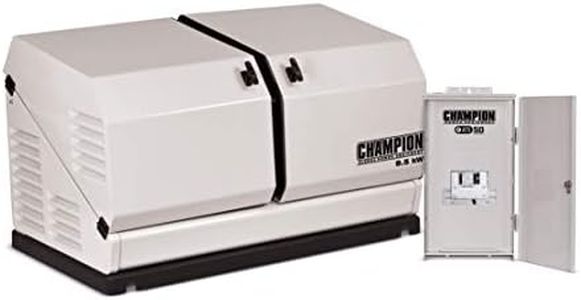
The Champion Power Equipment 100177 8.5-kW Home Standby Generator is a robust solution for residential power needs. With an 8500-watt power output, it offers plenty of energy to keep essential appliances running during an outage. One standout feature is its ability to run continuously without the need for refueling, thanks to its connection to either propane or natural gas, which makes it very convenient for long-term use.

The generator comes with a 50-Amp outdoor-rated automatic transfer switch, ensuring seamless power transfer during an outage, which is a significant plus for reliability and ease of use. Additionally, it boasts a Sub Zero Start system capable of operating in temperatures down to -22º F, making it suitable for various climates. The innovative gullwing enclosure design allows for easy access during installation and servicing, making it practical for maintenance.

It also operates quietly due to its low-tone muffler and sound-dampening liner, an essential feature for residential use to avoid disturbing neighbors. However, at 394 pounds, it is quite heavy, which could be a drawback if you need to move it frequently. The unit is designed for stationary use, so it's not highly portable. While the noise level is controlled, it's still something to consider in a quiet neighborhood. It requires a capacitive discharge ignition (CDI) system to start, which is reliable but might need occasional maintenance. This generator is ideal for homeowners looking for a powerful, reliable, and low-maintenance standby power solution, especially in areas prone to harsh weather conditions. The ease of installation, automatic transfer switch, and quiet operation make it a strong candidate for residential use, though its weight and lack of portability might be limiting factors for some users.

Rating
10.0
Chosen by1,410
Power Output (Wattage)
Fuel Type
Start Type

Most important from
58 reviews

Power Output (Wattage)
The generator's capacity is more than sufficient for off-grid applications and future expansion, with the ability to run heavy 240V equipment when needed.
Fuel Type
The generator can serve up to 52A of load with LPG, covering essential appliances and circuits in the home.
Start Type
Installation was fairly straightforward, with the generator automatically starting and restoring power in under a minute during an outage.
#2

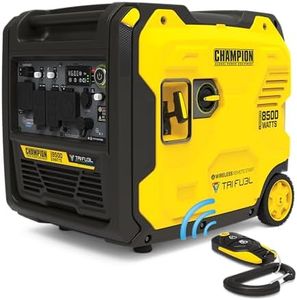
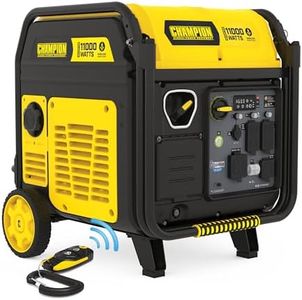
Champion Power Equipment 11,000-Watt Wireless Remote Start Home Backup Portable Inverter Generator with Quiet Technology and CO Shield

Rating
9.4
Power Output (Wattage)
Run Time
Noise Level

Most important from
80 reviews

Power Output (Wattage)
The generator’s power quality is excellent, with steady LED lights and no pulsing, even better than non-inverter models.
Run Time
The generator ran flawlessly for a week during a hurricane, providing consistent power with impressive runtime of over 10 hours on a single tank.
Noise Level
The noise level is significantly lower than other generators, making it less likely to disturb neighbors, comparable to a gas lawn mower.
Start Type
Setup is straightforward with clear instructions, and the generator fired up on the first attempt using the electric push-button start.

The Champion Power Equipment 11,000-Watt Wireless Remote Start Generator is a solid choice for home backup use. It offers an impressive power output, with 11,000 starting watts and 9,000 running watts, making it capable of handling substantial power needs. The generator runs on gasoline and provides up to 15 hours of run time on a full tank, which is beneficial for prolonged use during power outages. The inclusion of a wireless remote key fob allows you to start and stop the generator from up to 80 feet away, adding to the convenience.

It also features an electric start and Cold Start Technology, ensuring easy operation even in colder climates. Safety is enhanced with the CO Shield, which automatically shuts off the generator if dangerous carbon monoxide levels are detected. However, at 200 pounds, it is relatively heavy, which might affect its portability despite the wheel kit included. The noise level is 64 dBA from 23 feet, which is quieter than some other generators, but it might still be noticeable in quiet environments.

The generator comes with a variety of outlets, including GFCI household outlets and a 12V automotive-style outlet, making it versatile for various power needs. The 3-year limited warranty and lifetime technical support from Champion are also strong selling points. In summary, this generator is suitable for residential users looking for a reliable and feature-rich backup power solution.

Rating
9.4
Power Output (Wattage)
Run Time
Noise Level

Most important from
80 reviews

Power Output (Wattage)
The generator’s power quality is excellent, with steady LED lights and no pulsing, even better than non-inverter models.
Run Time
The generator ran flawlessly for a week during a hurricane, providing consistent power with impressive runtime of over 10 hours on a single tank.
Noise Level
The noise level is significantly lower than other generators, making it less likely to disturb neighbors, comparable to a gas lawn mower.
Start Type
Setup is straightforward with clear instructions, and the generator fired up on the first attempt using the electric push-button start.
#3

Champion Power Equipment 11,000-Watt Electric Start Dual Fuel Home Backup Portable Inverter Generator with Quiet Technology and CO Shield

Rating
8.5
Noise Level
Start Type
Fuel Type

Most important from
44 reviews

Noise Level
Surprisingly quiet for its power both under load and idling, much quieter than comparable open frame generators.
Start Type
Starts effortlessly on propane with consistent first-try electric starts every time.
Fuel Type
The dual fuel option provides valuable flexibility for cleaner fuel use or longer storage.
Portability
Well-designed handle and wheel kit make moving the generator easier despite its 205-pound weight.
Power Output (Wattage)
Runs multiple household circuits smoothly, maintaining stable voltage and frequency without issues.

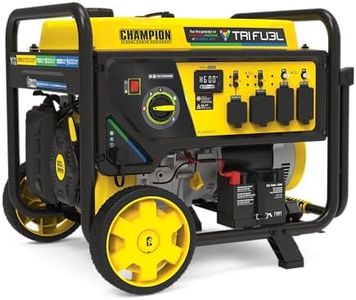
The Champion Power Equipment 11,000-Watt Dual Fuel Generator is a strong choice for home backup power, providing 11,000 starting watts and 9,000 running watts on gasoline. It also runs on propane, offering flexibility for cleaner fuel use or longer fuel storage. You can expect up to 15 hours of continuous use on a full gas tank, which is beneficial for extended outages. This model operates at 64 decibels from 23 feet away—similar to a normal conversation—so it won’t be too disruptive around your home.

Featuring an electric start with battery included, it is easy to operate even in cold weather due to Cold Start Technology. The generator includes several useful outlets, such as household and higher voltage options, allowing you to power multiple devices or appliances simultaneously. Portability is reasonable given its power output; it weighs 205 pounds but comes with a wheel kit to assist movement. However, at this weight, it is not ideal for carrying long distances or frequent camping trips.

The built-in CO Shield safety feature automatically shuts off the generator if carbon monoxide buildup is detected, enhancing safety. If you require a reliable, powerful home backup generator that runs on two fuel types with quiet operation and safety features, this Champion model is a suitable option. For those needing something lighter or more compact for frequent transport, this model may be somewhat heavy.

Rating
8.5
Noise Level
Start Type
Fuel Type

Most important from
44 reviews

Noise Level
Surprisingly quiet for its power both under load and idling, much quieter than comparable open frame generators.
Start Type
Starts effortlessly on propane with consistent first-try electric starts every time.
Fuel Type
The dual fuel option provides valuable flexibility for cleaner fuel use or longer storage.
Portability
Well-designed handle and wheel kit make moving the generator easier despite its 205-pound weight.
Power Output (Wattage)
Runs multiple household circuits smoothly, maintaining stable voltage and frequency without issues.

Buying Guide for the Best Champion Generators

Choosing the right generator can be a daunting task, but with the right approach, you can find the perfect fit for your needs. Generators are essential for providing power during outages, for outdoor activities, or for use on job sites. To make an informed decision, you need to understand the key specifications and how they relate to your specific requirements. Here are the main specs to consider when selecting a generator and how to navigate them.
Power Output (Wattage)Power output, measured in watts, indicates how much electrical power the generator can produce. This is crucial because it determines what and how many devices you can run simultaneously. Generators typically range from 1,000 watts to over 10,000 watts. For light use, such as camping or running a few household appliances, a generator with 1,000 to 3,000 watts may suffice. For more demanding needs, like powering an entire home or heavy-duty equipment, you might need 5,000 watts or more. Assess your power needs by listing the devices you plan to use and their wattage requirements.
Fuel TypeGenerators can run on various types of fuel, including gasoline, propane, diesel, and natural gas. The fuel type affects the generator's efficiency, cost of operation, and convenience. Gasoline is widely available but has a shorter shelf life. Propane is cleaner and has a longer shelf life but requires a separate tank. Diesel is efficient and long-lasting but can be more expensive. Natural gas is convenient for home use if you have a gas line but is not portable. Choose a fuel type based on availability, cost, and your specific use case.
Run TimeRun time refers to how long a generator can operate on a full tank of fuel. This is important for planning how often you will need to refuel, especially during extended power outages or long outdoor events. Run times can vary from a few hours to over 12 hours. For occasional use or short-term needs, a generator with a shorter run time may be sufficient. For continuous use, look for a generator with a longer run time to minimize interruptions. Consider your typical usage patterns to determine the appropriate run time for your needs.
PortabilityPortability is a key factor if you need to move your generator frequently or use it in different locations. Portable generators are designed with wheels and handles for easy transport, while standby generators are stationary and permanently installed. Portable generators are ideal for camping, tailgating, or job sites, while standby generators are better for home backup power. Evaluate how and where you will use the generator to decide if portability is a priority for you.
Noise LevelNoise level, measured in decibels (dB), indicates how loud the generator will be during operation. This is important for comfort and compliance with noise regulations, especially in residential areas or campsites. Generators can range from 50 dB (quiet) to over 80 dB (loud). For quiet environments, such as camping or home use, look for generators with a noise level below 60 dB. For construction sites or other noisy environments, a higher noise level may be acceptable. Consider where you will use the generator and how important noise level is to you.
Start TypeGenerators can have different start types, including manual recoil start, electric start, and remote start. The start type affects the ease of use and convenience. Manual recoil start requires pulling a cord, which can be physically demanding. Electric start uses a push-button or key, making it easier to operate. Remote start allows you to start the generator from a distance, adding convenience. Choose a start type based on your preference for ease of use and physical capability.

FAQ