10 Best Boat Vhf Radios 2026 in the United States

Related Products
Up to 10% off
Recommended lists
Vhf Radios
Our technology thoroughly searches through the online shopping world, reviewing hundreds of sites. We then process and analyze this information, updating in real-time to bring you the latest top-rated products. This way, you always get the best and most current options available.

Our Top Picks
Winner
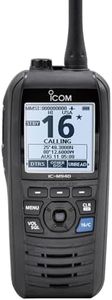
Icom M94D 21 USA VHF Marine Transceiver with DSC & AIS Receiver
The Icom M94d VHF Marine Radio stands out in the marine communication category, especially for those who prioritize safety and ease of use. One of its major strengths is the AIS Receiver integrated with Distress Signal Calling (DSC), which enhances safety by providing immediate distress signal capabilities and vessel traffic information. The simplified navigation system with a dimmable back-lit screen ensures clear visibility in various lighting conditions, making it user-friendly.
Furthermore, its ability to float and automatically flash even when powered off is a significant safety feature, ensuring the device is easily retrievable if dropped overboard. The AquaQuake draining function is another practical feature that prevents audio degradation by removing water from the grill. With a 6 W RF Output Power and up to 10 hours of operating time, it offers robust performance and long-lasting battery life, which is crucial during extended trips.
The radio is also waterproof, adding to its durability and reliability in marine environments. However, it has a relatively limited number of channels (4), which might be a drawback for users needing more communication options. Additionally, its size and weight (2.2 pounds) may affect portability for some users, especially those looking for a more compact device. Despite these minor drawbacks, the Icom M94d is highly rated by users, indicating satisfaction with its performance and features. This marine radio is best suited for boaters who need reliable safety features, durability, and ease of use.
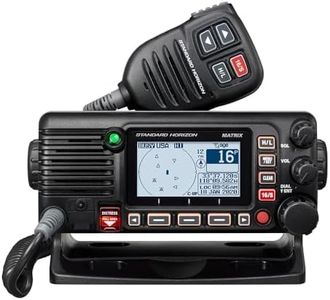
FIXED MOUNT VHF/GPS/AIS/NMEA2000
Most important from
27 reviews
The Standard Horizon GX2410GPS is a fixed mount VHF marine radio designed for boaters who need reliable communication with built-in GPS and AIS features. It features a 3.5-inch color display and button controls, making it simple to operate for users who prefer physical interfaces over touchscreens.
This radio supports NMEA2000 networking, allowing easy integration with other marine electronics to keep navigation and communication tools synchronized. Its weather resistance and included dust cover contribute to its durability in challenging marine environments. Weighing 5 pounds, it is intended for panel or dashboard mounting, making it ideal for fixed installations on boats.
The package comes with essential accessories like a DC power cord and mounting bracket, along with a 3-year warranty. Being a fixed mount radio, it caters to serious boaters seeking integrated GPS and AIS functionality rather than portable use. This model is well suited for those prioritizing these features and durability.
Most important from
27 reviews
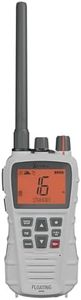
Cobra BlueBound 350 VHF Handheld Marine Radio - White – 6-Watt, Floating, Long Range, NOAA Weather Alerts, International Functionality, IPX7 Waterproof, USB-C, Submersible, LCD Screen, Belt Clip
Most important from
48 reviews
The Cobra BlueBound 350 is a solid choice for anyone needing a reliable handheld VHF radio on the water. Its 6-watt power output is adjustable, meaning you can save battery when communicating over shorter distances or boost power for longer reach, which is handy on bigger vessels or open waters. With 98 channels, including international ones, you’ll have plenty of options to stay connected and safe. The inclusion of NOAA weather alerts is a big plus, giving you real-time updates about weather conditions to help you avoid surprises. This radio is designed for marine use with an IPX7 waterproof rating, so it can handle being dropped in water and still keep working. It even floats with a bright orange core, making it easy to spot if dropped overboard. The day/night LCD screen is clear and easy to read in different lighting, and the Tri-Watch feature lets you monitor important channels simultaneously, which is great for busy boating areas.
You get about 12 hours of battery life, which should cover most outings, and USB-C charging adds convenience. On the downside, it doesn’t have built-in GPS, which some users might miss if they want location tracking or GPS-based features. Also, while portable and lightweight, the radio is somewhat tall, which might affect storage space on smaller boats. The user interface is straightforward, but beginners might need a little time to get used to the channel and power settings. For those looking for a dependable, waterproof marine radio with strong weather features and good power flexibility, the Cobra BlueBound 350 is a fitting option. However, it lacks GPS integration, which could be a dealbreaker if that’s a key need.